
FR-4 vs Rogers vs Aluminum vs Polyimide
This guide explains the four most common PCB substrate families, when to use them,
and how they impact cost, reliability, and manufacturability.
1 FR-4 (Standard Epoxy Glass)
Electrical Properties (Typical)
- Dielectric constant (Dk): ~4.2–4.6
- Loss tangent (Df): ~0.015–0.020
- Tg options: 130°C–180°C+
Strengths
- Low cost
- Widely available
- Easy to fabricate
- Good mechanical strength
- Suitable for most digital designs
Limitations
- Higher signal loss at high frequencies
- Not ideal for RF/microwave
- Thermal conductivity is low
Best Used For
- General digital electronics
- Industrial controls
- Consumer electronics
- Standard multilayer boards
Cost Level: Low
Lead Time Impact: Minimal
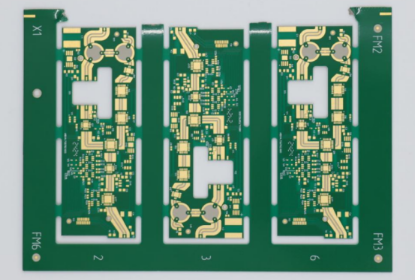
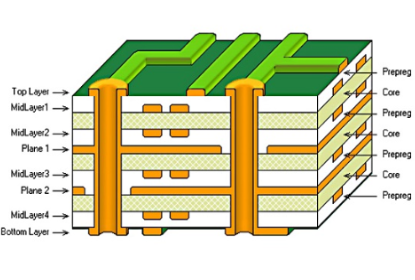
2️ Rogers (High-Frequency / RF Laminates)
What It Is
- Advanced hydrocarbon/ceramic or PTFE-based laminates designed for RF and high-frequency stability.
Electrical Properties (Varies by Type)
- Dk: 2.2–3.7 (very stable)
- Df: extremely low (0.0009–0.003)
- Stable across temperature
- Tight dielectric control
Strengths
- Very low signal loss
- Stable impedance
- Excellent RF performance
- Tight dielectric control
Limitations
- Significantly more expensive
- Requires controlled fabrication process
- May need hybrid stackups with FR-4
- Limited supplier stocking
- Limited supplier stocking
Best Used For
- RF amplifiers
- Antennas
- 5G, radar, microwave circuits
- High-speed signal integrity designs
- Cost Level: High
- Lead Time Impact: Moderate–High
- Note: Many designs use hybrid stackups (Rogers outer layers + FR-4 cores) to reduce cost.
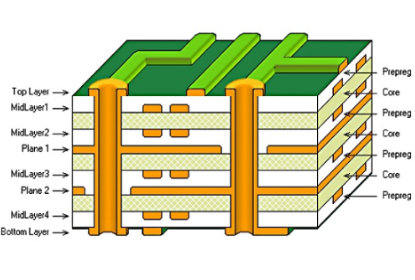
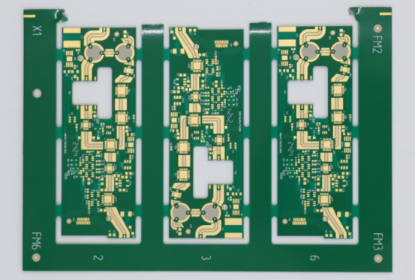
3️ Aluminum (Metal Core PCB / MCPCB)
What It Is
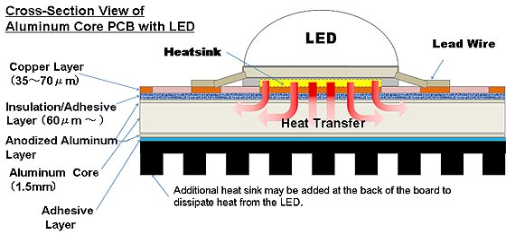
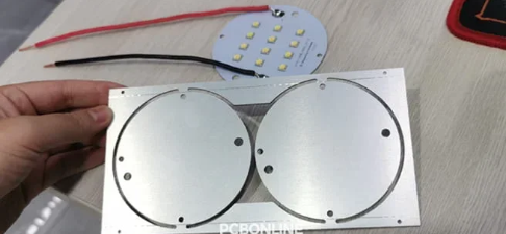
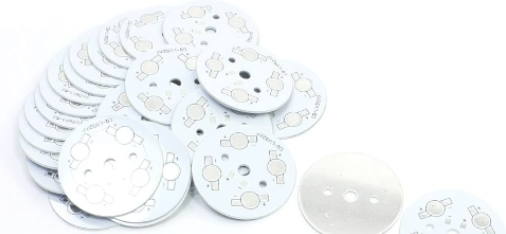
- PCB built on an aluminum base plate for heat dissipation.
- Structure:
- Copper → Dielectric → Aluminum core
Electrical Properties
- Dk varies (thin dielectric layer)
- Excellent thermal conductivity
- Not used for high-density multilayers
- May require copper thieving or process adjustments
Strengths
- Excellent heat dissipation
- Mechanically rigid
- Ideal for power applications
Limitations
- Typically single- or double-layer only
- Limited multilayer capability
- Mechanical drilling complexity
- Not suitable for fine HDI designs
Best Used For
- LED lighting
- Power supplies
- Motor control
- High-heat power circuits
Cost Level: Moderate
Lead Time Impact: Moderate
Aluminum boards are selected for thermal management, not signal performance.
4️ Polyimide (High-Temperature / Flexible Applications)
What It Is
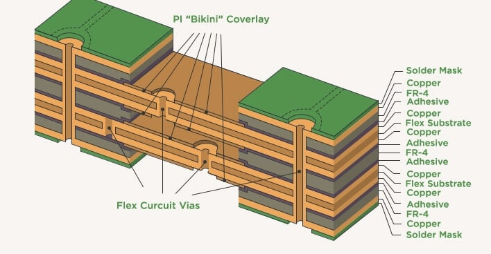
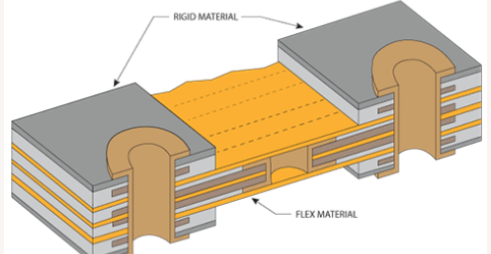
- High-temperature polymer substrate used in flex and rigid-flex PCBs.
Electrical Properties
- Dk: ~3.4–3.6
- High thermal stability
- Excellent mechanical flexibility
Strengths
- Withstands high temperatures
- Excellent chemical resistance
- Required for flex circuits
- Superior thermal cycling performance
Limitations
- Higher cost than FR-4
- More complex fabrication
- Moisture absorption considerations
Best Used For
- Flex circuits
- Rigid-flex boards
- Aerospace
- Medical devices
- Harsh environments
Cost Level: Moderate–High
Lead Time Impact: Moderate
Side-by-Side Comparison
| Property | FR-4 | Rogers | Aluminum | Polyimide |
|---|---|---|---|---|
| Cost | Low | High | Moderate | Moderate–High |
| Thermal Conductivity | Low | Low–Moderate | Very High | Moderate |
| RF Performance | Fair | Excellent | Poor | Good |
| Multilayer Capability | Excellent | Excellent | Limited | Excellent |
| Flexibility | No | No | No | Yes (flex) |
| Temperature Resistance | Good | Very Good | Good | Excellent |
How to Choose the Right Material
Choose FR-4 if:
- Cost matters most
- No extreme RF requirements
- Standard digital or power application
Choose Rogers if:
- RF above ~1–2 GHz
- Tight impedance control needed
- Signal loss must be minimized
Choose Aluminum if:
- Heat dissipation is critical
- LED or high-power design
- Mechanical rigidity required
Choose Polyimide if:
- Flex circuit required
- High-temperature environment
- Severe thermal cycling expected
Engineering Reality
- Most boards should stay on FR-4 unless:
- Signal loss justifies RF laminate
- Thermal load justifies metal core
- Mechanical design requires flex
- Switching materials often:
- Doubles raw material cost
- Increases lead time
- Requires different fabrication process windows
- Material choice should be driven by electrical physics or thermal necessity — not habit.